

Most teams put enormous energy into launching their first design system. Components are polished. Tokens are aligned. Documentation is written. There is a real sense of achievement when everything finally comes together.
Then reality sets in.
Products evolve. Teams grow. New requirements appear. Bugs surface. Accessibility standards shift. What once felt complete suddenly feels outdated. This is where many design systems start to struggle, not because the foundation was weak, but because change was never fully planned for.
Change is not a failure of a design system. It is proof that the system is alive.
Design system change management is about accepting that nothing is final and building processes that help teams adapt without chaos. When done well, change strengthens trust, improves adoption, and keeps systems relevant long term.
Why Design Systems Are Never Finished
A design system captures what a team knows at a moment in time. It reflects current products, platforms, and priorities. What it cannot do is predict the future perfectly.
New devices appear. Brand strategies evolve. Teams discover better patterns. Regulatory requirements change. Even small shifts can ripple through a system that touches every product surface.
Treating a design system as finished creates fragility. Teams hesitate to propose improvements. Small issues turn into workarounds. Over time, confidence erodes and the system stops being the source of truth it was meant to be.
When teams accept from the start that the system will change, decisions feel lighter. The goal shifts from perfection to adaptability. That mindset alone removes a huge amount of pressure from design system work.
What Change Really Looks Like Inside a Design System

Change is rarely one dramatic redesign. It usually arrives quietly.
A button needs a new state. A spacing value feels off in a real layout. A component breaks in an edge case. A one off solution suddenly proves useful across multiple teams.
Some changes are corrective. Others are additive. Some are structural and require careful planning. Most sit somewhere in between.
Recognizing this spectrum matters because it shapes how teams respond. Not every update needs a major process. Not every improvement should be rushed. Clear categories help teams move faster without lowering quality.
Thinking Beyond Components From Day One
Strong change management starts before the first release.
Early in a design system initiative, it helps to ask practical questions even if the answers are not fully clear yet.
- What happens when a team finds a bug days before launch
- How quickly can fixes realistically be delivered
- How should a one off pattern be promoted into the system
- What happens to the original implementation when that happens
These questions influence how components are structured, how tokens are named, and how documentation is written. They also help manage expectations across the organization.
When teams know how change flows, they trust the system more. Even when answers evolve over time, acknowledging the uncertainty builds credibility.
How Design System Teams Work Differently From Product Teams
Design system teams operate under different constraints than feature teams.
They move slower by design. Every decision affects multiple products. Quality thresholds are higher because mistakes scale quickly. Communication overhead is larger because many teams rely on the same assets.
This difference often creates tension. Product teams want speed. Design system teams want stability.
Change management acts as the bridge. Clear processes help design system teams respond without being reactive. Product teams understand why some changes take time and which issues deserve immediate attention.
When this balance is missing, frustration grows on both sides.
Creating Clear Triage and Support Processes
Bug fixes are a perfect example of why preparation matters.
When an issue is reported, the design system team needs a consistent way to assess severity and impact. Is it blocking a release or is it cosmetic. Does it affect one product or many. Is there a workaround.
Triage provides clarity. It also creates a shared language for prioritization.
Equally important is communication. Teams need to know when their issue has been acknowledged and what happens next. This does not require rigid service agreements, but it does require consistency.
Clear response expectations reduce anxiety and prevent duplicate work. They also reinforce that the design system team is a partner, not a bottleneck.
Building Trust Through Communication and Documentation
Trust grows through visibility.
When teams understand how decisions are made, why changes take time, and what is coming next, they engage more constructively. Documentation plays a huge role here, not just for components, but for processes.
Documenting how changes are proposed, reviewed, and released removes ambiguity. Acknowledging contributions publicly reinforces shared ownership.
Even small gestures matter. Thanking someone for reporting a bug or suggesting an improvement signals that participation is valued. Over time, this shapes the culture around the design system itself.
Designing for Uncertainty With Flexible Structures
Systems struggle with uncertainty because they encode decisions.
Token naming is a common example. Strict numeric or size based hierarchies work well when requirements are stable. They struggle when new values need to fit between existing ones.
When teams are unsure what the future holds, looser semantic naming can help. Names that describe use cases or intent rather than strict order allow room to grow without breaking patterns.
This does not mean abandoning structure entirely. It means choosing the right level of rigidity for the confidence you have. Flexibility is not lack of discipline. It is a deliberate strategy.
Managing Change Across Design and Code Together
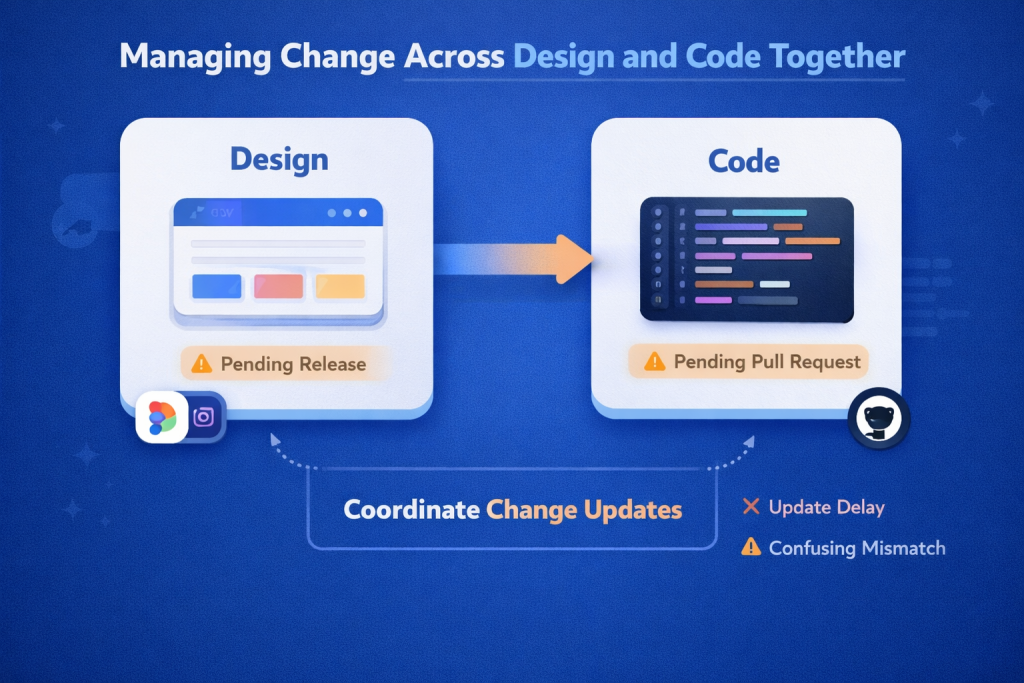
Once design and code are aligned, rolling out changes becomes another challenge.
Releasing updates in design tools immediately can create temporary mismatches if code changes lag behind. Holding updates back can slow momentum.
There is no universal answer. What matters is intention and communication.
Teams should decide when alignment is critical and when temporary divergence is acceptable. Clear notes about upcoming changes help designers and developers plan accordingly.
Change management here is less about tools and more about coordination.
Letting Your Processes Evolve Over Time
Contribution models often start informal and become more structured as systems grow. This is not a weakness. It is a sign of maturity.
Rigid governance too early can discourage participation. Too little structure later can create confusion.
Regularly reviewing workflows ensures they continue to serve the teams relying on the system. What worked for five contributors may not work for fifty.
Processes should evolve just like components do.
Baking Change Into the Foundation of Your Design System
The less confident teams are in handling change, the more final decisions feel. This fear leads to over engineering and hesitation.
Assume change will happen. Plan for it. Talk about it openly.
Whether it is adding a new token, deprecating a component, or rethinking a naming system, success depends on how well the change is supported, documented, and communicated.
A design system that manages change well becomes resilient. Teams trust it. Products benefit from it. The system grows without losing coherence.
Supporting Change With the Right Documentation and Tools
As design systems scale, managing change manually becomes difficult.
Teams need a shared source of truth where decisions are documented, updates are visible, and processes are clear. This is where structured design system documentation becomes essential.
UI Vault helps teams document design systems as living systems rather than static libraries. By centralizing components, guidelines, and change communication, teams can adapt confidently while maintaining alignment across design and development.
Change will always be part of design systems. The difference between systems that thrive and those that fragment is how intentionally that change is managed.