

Design systems rarely fail because of missing components. They fail because people slowly stop caring.
A button might be perfectly documented. A pattern might be technically sound. Yet adoption stalls, workarounds appear, and teams quietly drift away. When this happens, the problem is almost never the system itself. It is the culture around it.
A healthy design system culture shapes how people feel when they interact with the system. It influences whether they trust it, contribute to it, and advocate for it. Without that foundation, even the most polished system becomes shelfware.
Design systems are not just collections of UI decisions. They are shared agreements between people. They reflect how teams collaborate, communicate, and make decisions together. When culture is treated as an afterthought, the system struggles to grow. When culture is designed intentionally, the system becomes something teams rely on every day.
This article explores how to build a design system culture rooted in trust, openness, and shared ownership. These are not abstract ideas. They are practical habits that shape adoption and long term impact.
What a Healthy Design System Culture Really Means
A healthy design system culture is not about enforcing consistency at all costs. It is about creating an environment where consistency feels helpful rather than restrictive.
Culture reveals itself through daily interactions. It appears in feedback conversations, in the clarity around decision making, and in the recognition given to contributors.
When teams feel heard, they engage. When they feel ignored, they disengage quietly. Over time, that disengagement becomes fragmentation.
A strong culture creates clarity without rigidity. It gives teams confidence that the system exists to make their work easier, not slower. It also creates psychological safety. People feel comfortable asking questions, proposing changes, and admitting when something is not working.
Culture vs Process in Design Systems
Process defines how work moves forward. Culture defines how people experience that process.
Two teams can follow the same contribution workflow and have completely different outcomes. In one, contributors feel supported and encouraged. In the other, they feel overwhelmed and hesitant. The difference is not the process itself but how it is communicated and reinforced.
A culture focused only on rules tends to generate compliance without commitment. A culture focused on collaboration builds long term trust.
Why Tools Alone Do Not Create Alignment
Documentation tools, Figma libraries, and governance frameworks are essential. But they do not create alignment on their own.
Alignment comes from shared understanding. That understanding is built through conversations, context, and ongoing dialogue. Without these, tools become static references rather than living systems.
Design systems thrive when people understand not just what to use, but why it exists.
Tip 1: Share Progress Early and Often

One of the most common mistakes design system teams make is working in isolation. Weeks of work happen quietly. A release is announced. Adoption is expected immediately.
This approach creates distance.
Sharing progress early changes the dynamic completely. It invites people into the process rather than presenting them with finished decisions. Early visibility builds familiarity. Familiarity builds trust.
When teams see ideas evolving, they are more likely to support the outcome even if they did not shape every detail.
How Early Sharing Builds Trust Across Teams
Sharing work in progress signals openness. It tells other teams that their perspective matters.
Early feedback often reveals practical issues that might otherwise be missed. It also helps align expectations. People understand what is coming and why.
Over time, this transparency builds credibility. The design system team becomes a partner rather than a gatekeeper.
Practical Ways to Share Without Creating Noise
Sharing early does not mean sharing everything everywhere.
Design reviews, small preview sessions, and targeted updates work well. The goal is clarity, not overload.
Inviting the right stakeholders at the right time keeps communication focused and respectful of attention.
Tip 2: Celebrate Wins Big and Small
Design system work can feel endless. There is always another component to refine, another request to triage, another dependency to manage.
In that environment, it is easy to overlook progress.
Celebrating wins reminds teams that their efforts matter. It reinforces positive behavior and builds momentum. Recognition does not need to be formal to be effective.
Micro Wins That Deserve Attention
Not every win is a major release.
A clarified guideline. A resolved accessibility issue. A successful contribution from outside the core team. These moments deserve visibility.
Sharing them reinforces a sense of collective progress.
How Celebration Improves Long Term Adoption
When people see their contributions acknowledged, they feel invested. That investment increases care and ownership.
Over time, celebration becomes part of the culture. The system stops feeling like infrastructure and starts feeling like a shared achievement.
Tip 3: Build Trust Through Consistent Communication
Trust is built through reliability. When teams know they will get responses, clarity, and follow up, they engage more confidently.
Inconsistent communication creates uncertainty. People hesitate to ask questions. Feedback slows down. Small issues grow into larger frustrations.
Consistency does not require constant availability. It requires predictability.
Creating Feedback Loops That Actually Work
Feedback channels should be clear and visible. People should know where to ask questions and what to expect in response.
Closing the loop matters as much as opening it. Even when changes cannot happen immediately, explaining why builds understanding.
Office Hours One to One Conversations and Open Channels
Direct conversations humanize the system. Office hours and informal check ins create space for honest discussion.
These interactions surface insights that dashboards never will. They also strengthen relationships that sustain the system long term.
Tip 4: Design Systems Should Solve Real Problems
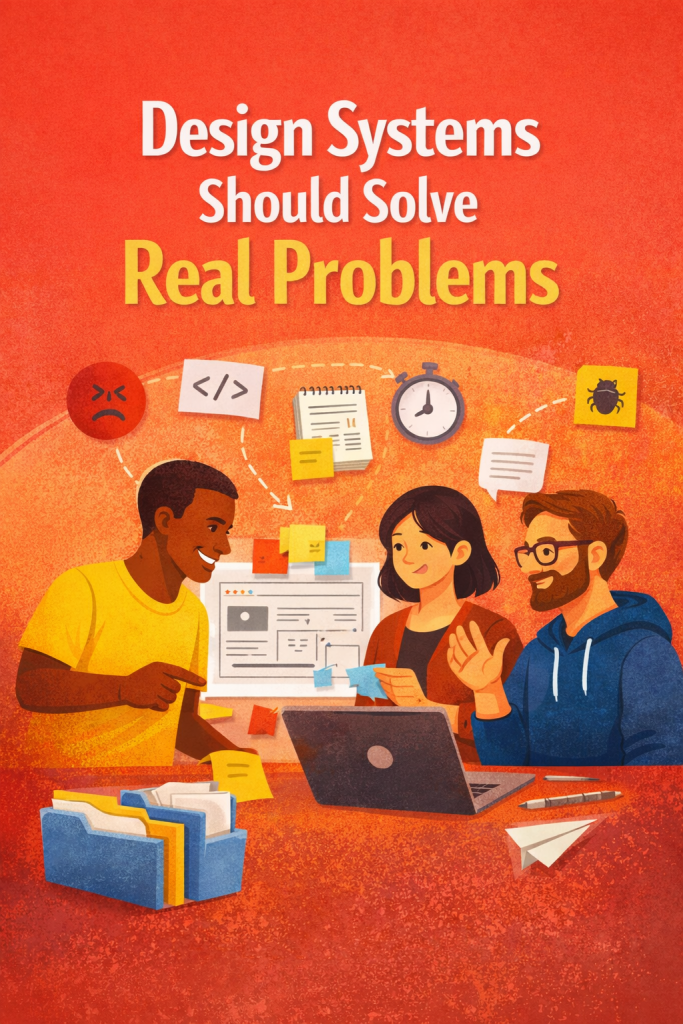
A design system should not exist for its own sake. Its value comes from solving real problems for real teams.
When systems feel disconnected from day to day work, adoption drops. Teams will find their own solutions because they have to move forward.
Understanding actual needs requires listening.
Learning Directly From Designers and Developers
Regular conversations reveal patterns. Pain points repeat. Workarounds emerge.
These insights help prioritize work that reduces friction rather than adding complexity.
Turning Real Use Cases Into System Improvements
When improvements are grounded in real use cases, they resonate. Teams recognize themselves in the solution.
This relevance increases trust and reinforces the idea that the system exists to support their work.
Tip 5: Responsiveness Shapes Perception
Responsiveness might sound like a basic expectation, but in design systems it carries more weight than most teams realize. How quickly and thoughtfully you respond to questions, feedback, or requests shapes how people perceive the system itself.
When responses are slow or unclear, teams assume the system is difficult to work with. Over time, they stop asking. They make decisions in isolation, which leads to inconsistency and frustration on all sides.
Being responsive does not mean saying yes to everything. It means acknowledging requests, providing context, and following through when possible.
What Happens When Feedback Goes Unanswered
Silence creates distance. When feedback disappears into a void, contributors feel dismissed even if that was never the intention.
Unanswered questions often turn into repeated mistakes. Teams recreate patterns that already exist or bypass the system entirely. This erodes trust and weakens adoption quietly.
How Responsiveness Builds Credibility Over Time
Consistent responses signal reliability. Even a brief update that explains timing or constraints helps people feel respected.
Over time, responsiveness builds confidence. Teams know that engaging with the design system is worth the effort because their input is valued and acknowledged.
Tip 6: Keep Governance Flexible Not Heavy
Governance is necessary. Without it, design systems become fragmented and difficult to maintain. But governance that feels heavy handed does more harm than good.
Rigid rules slow teams down. Excessive approvals discourage contributions. Designers and developers begin to see the system as a blocker rather than a support layer.
Healthy governance focuses on enabling good decisions instead of controlling every outcome.
When Governance Becomes a Barrier
When every change requires multiple meetings and lengthy reviews, participation drops. Contributors feel burdened by process rather than supported by it.
This often leads to work happening outside the system. Teams move faster on their own, which defeats the purpose of having shared standards.
Designing Contribution Paths That Feel Lightweight
Flexible governance reduces friction. Not every decision needs the same level of oversight.
Clear guidelines, documented principles, and quick conversations often replace formal approvals. This approach respects people’s time while still maintaining quality and consistency.
Tip 7: Invite Every Type of Contribution

Contributions do not always look like polished components. Feedback, bug reports, usage insights, and questions are all valuable inputs.
When contribution is narrowly defined, many people assume they have nothing to offer. Expanding that definition invites broader participation and stronger ownership.
A healthy system reflects the perspectives of designers, engineers, product managers, and quality teams.
Small Contributions That Make a Big Difference
A comment that clarifies a guideline. A note about edge cases. A suggestion based on real usage.
These small inputs accumulate into a system that feels grounded and practical. They also help contributors feel connected to the outcome.
How Shared Ownership Strengthens Systems
When people contribute, they care. When they care, they advocate.
Shared ownership turns a design system from a centralized resource into a collective responsibility. That shift dramatically improves adoption and resilience.
Building a Design System Together Not For Others
Design systems are often framed as something built for teams. The most successful ones are built with them.
This mindset shift changes everything. Decisions become collaborative. Feedback feels welcome. The system evolves alongside the product instead of lagging behind it.
Stewardship replaces ownership. The design system team guides and supports rather than dictates.
When people feel included, they bring diverse perspectives. These perspectives strengthen the system and make it more adaptable to real world needs.
From a Design System to a Shared System
A healthy design system culture does not emerge overnight. It grows through consistent effort, thoughtful communication, and mutual respect.
Culture shapes adoption more than documentation ever will. Trust turns users into contributors. Contributors turn systems into shared assets.
When communication stays open, governance stays flexible, and contributions are welcomed in all forms, the design system becomes more than a tool. It becomes a shared language.
At that point, it stops being my design system or your design system. It becomes ours.