

Design systems are often introduced as tools for visual consistency. They help teams align on components, typography, spacing, and interaction patterns so products look and feel cohesive. Service design, on the other hand, is usually discussed at a much higher level. It focuses on customer journeys, operational processes, and how different parts of an organization come together to deliver value.
Because of this difference, many teams assume that design systems play only a small role in service design. The thinking goes something like this. Service designers map the journey. Product teams design the screens. The design system simply supplies the UI pieces at the end.
In practice, this separation rarely holds up.
When services become complex, multi channel, and long lived, design decisions start reflecting policy choices, operational constraints, and customer expectations. At that point, a design system is no longer just a library of components. It becomes an active participant in shaping how a service works, scales, and evolves.
This article explores how design systems fit into service design across the full lifecycle. From discovery to documentation to long term maintenance, you will see why involving design system teams early and often leads to better services and stronger systems.
What Service Design Really Means in Modern Product Teams
Service design focuses on the full customer experience rather than isolated screens or features. It brings together journeys, processes, and touchpoints so teams can design services that work consistently across products, teams, and channels.
Understanding Services Beyond Screens
Service design looks beyond individual interfaces. It focuses on how a user experiences a service from start to finish, including everything that happens before and after they interact with a screen. This can include policies, support processes, system integrations, and human touchpoints.
Instead of asking what a page looks like, service design asks broader questions. What problem is the user trying to solve. What steps do they go through. Where do they get confused. Where do internal handoffs create friction.
This shift in perspective is especially important in large organizations, where customers often interact with multiple teams without realizing it.
How Service Patterns Shape Consistent Experiences
Service patterns are repeatable stages that appear across many customer journeys. Examples might include account creation, identity verification, payment confirmation, or application submission.
A service pattern defines the intended experience for that stage. It describes what success looks like for the user and what needs to happen behind the scenes to deliver it. Because these stages repeat across services, patterns help teams avoid reinventing the same solution again and again.
When patterns are well defined, teams can focus on improving quality rather than rebuilding fundamentals.
Why Service Design Breaks Organizational Silos
One of the biggest benefits of service design is that it shifts attention away from internal structure. Instead of designing around departments or tools, teams design around real user needs.
This approach exposes gaps and inconsistencies that are easy to miss when each team works in isolation. It also creates shared ownership of the experience, which is critical for services that span products, platforms, and regions.
In this environment, reusable assets and shared standards become essential. That is where design systems naturally come into play.
Why Design Systems Naturally Belong in Service Design

Service design and design systems share the same foundation of consistency, reuse, and scalability. When systems are involved early, service decisions translate into clear, repeatable interfaces that teams can deliver and maintain with confidence.
Shared Goals Between Service Design and Design Systems
At their core, both service design and design systems aim to create consistency and efficiency at scale. Service design does this by standardizing experiences across journeys. Design systems do it by standardizing interface decisions across products.
When these efforts are disconnected, teams often duplicate work or create solutions that conflict with one another. When they are aligned, patterns and components reinforce each other.
The result is faster delivery, clearer guidance, and fewer surprises during implementation.
Frontend Decisions Reflect Service Decisions
Every UI choice carries meaning. A button label reflects policy language. A form layout reflects operational requirements. An error message reflects how much responsibility the user is expected to carry.
Because of this, frontend design cannot be treated as separate from service design. Design systems capture these decisions in a reusable form, making them visible and testable across services.
When design systems are involved early, they help ensure that service decisions translate into consistent and understandable interfaces.
Design Systems as Enablers Not Constraints
There is a common fear that design systems limit flexibility. In service design, the opposite is often true.
A well maintained system gives teams a stable foundation. Instead of debating basic UI decisions, teams can focus on the service logic and user outcomes that matter most. The system becomes an enabler of faster exploration and more confident experimentation.
The Role of Design Systems During Service Discovery
Involving design system teams during service discovery helps uncover inconsistencies, reuse opportunities, and hidden friction early. This early alignment makes it easier to improve the experience using existing system patterns before new solutions are introduced.
Auditing the Current Experience Through a System Lens
Service design usually begins with understanding the current experience. This involves reviewing existing journeys, identifying pain points, and spotting areas where the experience varies unnecessarily.
Design system teams bring a valuable perspective here. They can quickly see where components are used inconsistently or where teams have built custom solutions that already exist in the system.
This insight helps the wider team understand whether problems stem from missing system capabilities or from poor adoption.
Spotting Quick Wins Through Existing Components
One of the most practical benefits of early system involvement is the ability to identify quick improvements. Often, parts of a service can be simplified simply by using existing components more effectively.
This might involve replacing custom form patterns with standardized ones or aligning content structure with established guidance. These changes reduce cognitive load for users and maintenance effort for teams.
Because these improvements build on what already exists, they tend to be faster and lower risk.
Why Early Involvement Prevents Future Rework
When design systems are brought in late, teams often discover misalignment after designs are validated. At that point, changing direction is costly and frustrating.
Early involvement helps avoid this. System designers can flag potential issues, suggest better reuse, and ensure new patterns fit within the broader ecosystem. This reduces rework and builds trust between service teams and system teams.
Designing the Future Service Pattern With System Thinking
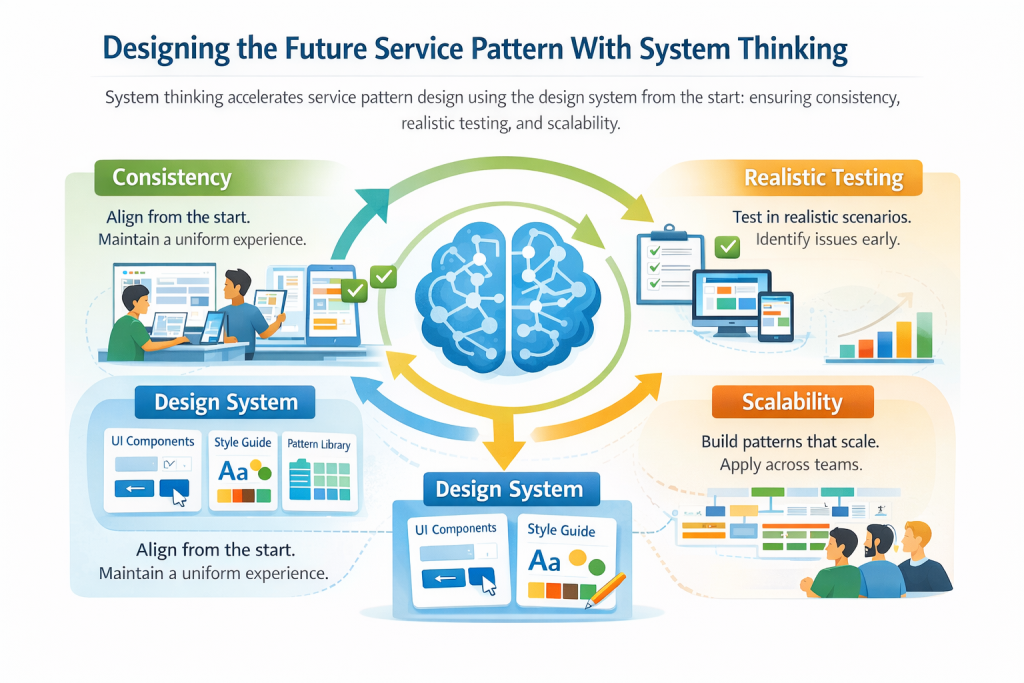
When service teams design future patterns using the design system from the start, they move faster and avoid unnecessary custom work. System thinking keeps the experience consistent, makes testing more realistic, and ensures the pattern can scale across teams without losing quality.
Defining the Experience Before Designing Interfaces
In the early stages of defining a new service pattern, the focus should remain on the experience rather than the interface. This includes outlining the steps of the service, success metrics, and user needs.
During this phase, design system teams typically take a lighter role. Their value increases once the service moves from conceptual definition to tangible experience design.
Embedding System Designers Into Pattern Design
As soon as teams begin designing the frontend experience, system expertise becomes critical. Embedding product and content designers from the design system team helps ensure that patterns are built using the system in the best possible way.
These designers understand not just how components look, but why they exist and how they are meant to be used. Their involvement encourages consistency and reduces the likelihood of custom solutions that later need to be justified or refactored.
Using the System to Prototype and Test at Speed
Design systems make it easier to prototype realistic experiences quickly. Instead of designing from scratch, teams can assemble flows using known components and patterns.
This speeds up testing and gives users a more accurate representation of the final service. It also helps system teams observe how components perform in real scenarios, which often reveals opportunities for improvement.
Learning From User Testing at the System Level
When service patterns are tested with real users, most teams focus on whether the journey works. Can users complete the task. Do they understand what to do next. Are there points of friction that block progress.
For design system teams, these sessions offer an additional layer of insight. Watching users interact with system components inside a real service context reveals far more than isolated component testing ever could. Small details like button placement, error messaging, or form grouping often surface as sources of confusion only when they appear as part of a full journey.
By attending or reviewing user testing sessions, system teams gain early signals about where components may need refinement. This might lead to improvements in accessibility guidance, content structure, or interaction behavior. Because these insights come before large scale rollout, changes can be made without disrupting multiple teams later.
Documenting Service Patterns the Right Way
Clear documentation turns a validated service pattern into something teams can actually use. Well structured guidance helps designers and engineers understand when to apply the pattern, how to implement it correctly, and how it fits within the broader design system.
Why Documentation Is Where Systems Shine
Once a service pattern has been validated, documentation becomes the foundation for adoption. This is an area where design system teams bring deep expertise. They are used to explaining complex ideas in a way that is practical, reusable, and easy to follow.
Good documentation does not just describe what exists. It explains when and why to use it. For service patterns, this clarity is essential, especially when teams outside the original project begin implementing the pattern in their own areas.
Balancing Detail Without Overwhelming Teams
One of the hardest parts of documentation is deciding how much detail is enough. Too little guidance leads to inconsistency. Too much detail discourages adoption.
Design system teams are well practiced at finding this balance. They understand how to provide guardrails without prescribing every decision. This helps teams feel supported rather than constrained when applying service patterns in new contexts.
Keeping Pattern Guidance Close to System Guidance
Hosting service pattern documentation alongside design system guidance creates strong connections between the two. Teams looking for components naturally discover patterns. Teams exploring patterns are guided back to the system.
This shared space increases awareness and reinforces the idea that service patterns and design systems are part of the same ecosystem, not separate initiatives.
Supporting Pattern Specific Components Without Fragmentation
Some service patterns require components or templates that are too specific to live in the core system. Design system teams can still play a role by ensuring these pattern specific elements follow best practices.
By providing guidance on structure, accessibility, and naming, system teams help prevent fragmentation while allowing patterns to evolve independently when needed.
Supporting Implementation and Adoption Across Teams
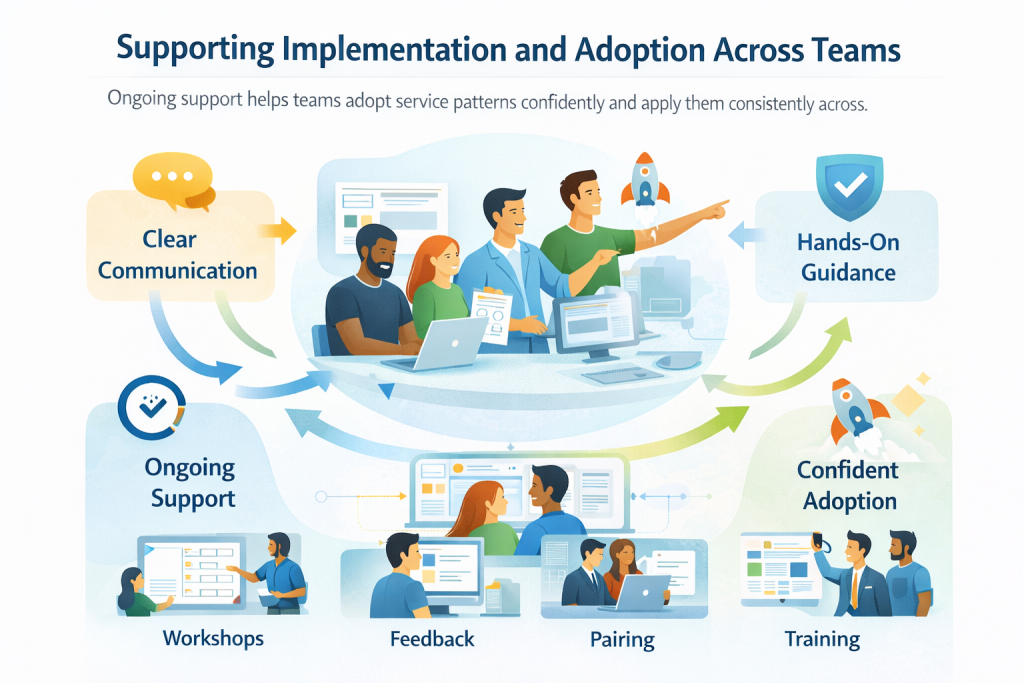
Successful service patterns depend on more than good design and documentation. Ongoing support, clear communication, and hands on guidance help teams adopt patterns confidently and apply them consistently across products and services.
Helping Teams Discover and Trust the Pattern
After documentation is published, the real work of adoption begins. Teams need to know the pattern exists and trust that it is the right solution for their needs.
Design system teams often already have established channels for communication. Slack spaces, office hours, internal newsletters, and demos are familiar tools. By using these channels, system teams can help service patterns gain visibility and credibility.
Guiding Engineering Teams Without Blocking Progress
As development begins, design system engineers can support teams by advising on the best use of existing libraries and components. This guidance is most effective when it feels collaborative rather than prescriptive.
System engineers are especially valuable when additional libraries are needed to support pattern specific functionality. Their involvement helps ensure these additions complement the system rather than compete with it.
Preventing Parallel Systems From Emerging
Without early guidance, teams may build solutions that look similar to system components but behave differently. Over time, this leads to parallel systems that increase maintenance costs and confuse users.
Having the design system team involved during setup reduces this risk. It ensures new work aligns with established standards and evolves in a coordinated way.
Maintaining Service Patterns After Launch
Service patterns continue to evolve once they meet real users and real data. Keeping patterns and documentation up to date protects trust in the experience and ensures the design system remains a reliable source of guidance.
Why Services Keep Changing After Release
Launching a service pattern is not the end of the journey. Real world usage often reveals new needs, edge cases, and opportunities for improvement.
As patterns evolve, documentation and guidance must evolve with them. Outdated information can undermine trust in both the pattern and the design system that hosts it.
Keeping Documentation Accurate and Trusted
When service pattern documentation lives within the design system site, system teams have a vested interest in keeping it current. Supporting service teams in updating content helps protect the overall reputation of the system.
Clear ownership and review processes make this ongoing maintenance manageable rather than overwhelming.
Sharing Ownership Between System and Service Teams
Over time, service teams often become more confident in managing their own patterns. The role of the design system team can shift from hands on support to oversight and quality assurance.
This shared ownership model allows systems to scale without becoming a bottleneck.
Balancing Core Design System Work With Service Design Support
Design system teams must support service design without losing focus on maintaining and evolving the core system. Clear boundaries, shared ownership, and defined roles help teams contribute where impact is highest while keeping the system healthy and scalable.
The Hidden Cost of Deep Service Involvement
Supporting service patterns can require significant time and mental effort. For design system product managers, balancing this work with core system responsibilities is a real challenge.
Patterns are complex and long lived, which can stretch team capacity if boundaries are not clear.
Setting Boundaries Without Losing Impact
Clear expectations help manage this balance. Defining when the system team leads, supports, or advises allows both sides to plan effectively.
This clarity ensures system teams remain impactful without becoming overloaded.
Building Toward Self Sufficient Service Teams
As service design matures within an organization, pattern teams often become better equipped to maintain standards themselves. This is a positive sign of success.
Design system teams can then focus on evolving the system while still supporting high impact initiatives where their expertise adds the most value.
What This Means for Teams Using UI Vault
For teams working with UI Vault, the connection between design systems and service design becomes easier to manage. UI Vault brings components, documentation, and shared standards into one place, making it simpler to support service patterns alongside core system guidance.
By centralizing design decisions and making them accessible to everyone involved, UI Vault helps teams scale services without losing consistency or clarity. It supports collaboration across disciplines and keeps both systems and services aligned as they grow.
Conclusion
Design systems and service design are strongest when they evolve together. When systems are treated as more than UI libraries, they become powerful tools for delivering consistent, high quality services.
By involving design system teams throughout the service design lifecycle, organizations reduce rework, improve adoption, and create experiences that scale with confidence. As services become more complex, this partnership is no longer optional. It is essential.